
iVCam can transfer video from mobile phone to PC via USB connection, which is more stable and fast.
iOS
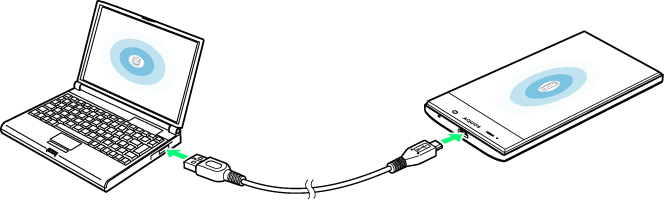
First, make sure you have installed the latest or earlier version of iTunes on your computer. After connecting your phone to the computer via USB:
- Ensure that your phone appears in iTunes (e.g., you can view photos, music, etc.), check here if not visible;
- Confirm that the device appears in the system’s Device Manager as “Portable Devices → Apple iPhone/iPad” and “Universal Serial Bus controllers → Apple Mobile Device USB Driver“. If instead you see “libusb-win32 devices → iPhone(Composite Parent)” (likely installed by other programs using libusb-win32 drivers), right-click it, select “Uninstall device,” check “Delete the driver software for this device,” click “OK,” then reconnect your phone.
Open iVCam software after connecting via USB. Normally, it will automatically use USB for video transmission.
If USB connection fails, ensure the Apple Mobile Device Service service is enabled.
If the USB connection frequently drops, please check the following:
- Make sure that the desktop version of iTunes is installed (do not install the version from the Microsoft Store). You can also try restarting the AMDS service.
- Close other software that may be using the USB port (especially software based on the libusb-win32 driver; refer to the 2nd point in the previous section), including but not limited to iMazing, iOS screen mirroring tools & recorders, iTools, 3uTools, etc. Uninstall them if necessary.
- USB cable or port issues:
Bandwidth Competition: Multiple devices connected at the same time will occupy bandwidth. Please disconnect other unnecessary devices and try to connect the phone to a dedicated USB controller.
Hardware Issues: Use an original Apple or MFi-certified high-quality cable and try plugging it into different USB ports, especially the ports on the back of the motherboard (more stable than front panel or hub ports).
Bitrate Too High: USB 2.0 supports up to1080p/60fps. If you experience lag or disconnections, try temporarily lowering it to720p/30fpsor lower to improve stability.
Use a USB 3.0 Port: iPhone 15 Pro and later models support USB 3.0. Connecting via USB 3.0 is faster and more stable. - In the APP settings, select “HEVC” for video encoding, which has higher compression efficiency than H.264 and uses less bandwidth.
- After disconnecting the USB, restart the iOS device and try reconnecting.
- If none of the above methods work, try lowering the resolution, frame rate, and quality. You can also try reinstalling a clean operating system.
You can also send us the software logs for analysis.
This disconnection is usually due to hardware or system issues. Please refer to the instructions above and troubleshoot on your own.
If it really cannot connect and there is no Wi‑Fi network available, you can also turn on Personal Hotspot on your phone, connect your computer to the phone’s hotspot, and then connect via Wi‑Fi.
Android
USB Driver
If your phone can’t be recognized after connecting to your PC, please install the phone’s USB driver. You can directly install the official mobile assistant software, or download it here or search according to your mobile phone brand, for example, searching “Android USB Driver for Samsung“.
After installing the driver, connect your phone to your PC and it will be recognized as a USB storage or Media device based on your selection – Transfer files (MTP) or Transfer photos (PTP).
USB Debugging
On your phone side, enable the USB Debugging option under Settings > Developer options:
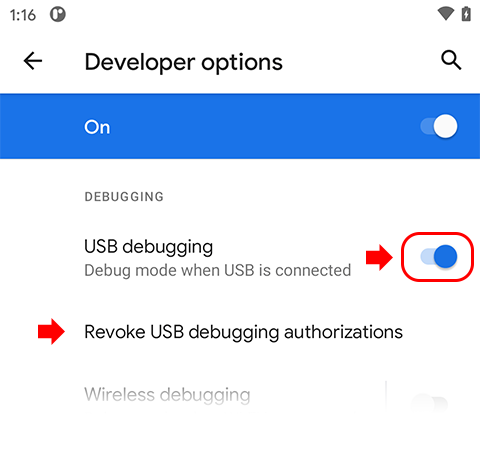
For Android 4.2 and later, the Developer options is hidden by default. Show it using the following steps:
- On the device, go to Settings > About <device>.
- Tap the Build number 7 times to make Settings > Developer options available.
- Then enable the USB Debugging option.
Google “Enable USB Debugging on Android” for more details if you don’t know how to do that.
Tip: You might also want to enable the Stay awake option, to prevent your Android device from sleeping while plugged into the USB port.
USB mode
When the phone is connected to the PC via USB cable, select using USB for “Transfer files (MTP)” or “Transfer photos (PTP)“, instead of “Charging“.
Run iVCam PC client and wait for a while, the phone will prompt you to allow USB debugging if it’s connected for the first time:
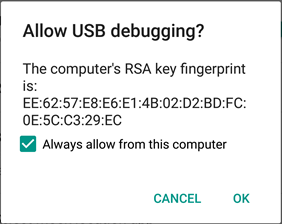
Check “Always allow from this computer” and press “OK” to continue.
If the prompt doesn’t show up and the connecting fails, you can try:
- Revoke USB debugging authorizations in the Developer options;
- Reconnect the USB cable;
- Reboot your phone if it still doesn’t work;
- Turning off and on the USB debugging option;
- Turning off and on the developer mode.
Note: This step is necessary for iVCam to work properly. Google for help if the above methods do not work.
iVCam
If the phone is properly configured and connected to the PC with a USB cable in USB debugging mode, iVCam will automatically connect and transfer video via USB.